The History of the Wasserfallenbahn
From a Railroad Tunnel to a Destination for Adventure
Since 1956, a train has been running from Reigoldswil to the Jura Mountains. It began as a shuttle for skiers, weathered the decline in snowfall, reinvented itself with scooters and sleds, and was completely replaced in 2006—financed largely by the region’s residents, who still own it today.
The fact that it stands right here of all places has to do with a railroad tunnel that was never completed.
The tunnel came before the railroad
In 1874, construction began here on a railroad tunnel through the Jura Mountains. Eleven months later, the project was completed.
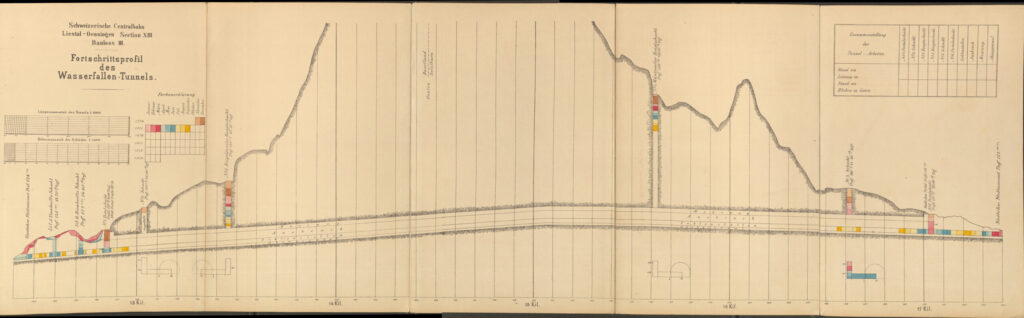
Anyone who gets out of their car at the valley station today is standing on a railroad right-of-way. It was built in 1874—for a train that never ran.
As early as 1850, British engineers Robert Stephenson and Henry Swinburne were commissioned by the Federal Council to determine where the railroad should cut through the Jura Mountains. The Reigoldswil–Mümliswil route, running straight through the Wasserfallen, would have been the shortest connection between Basel and Bern. The contract was awarded to the Hauenstein line. In the valley, disappointment lingered—along with hope.
Twenty-two years later, it returned. A new railroad law enacted in 1873 required freight trains to take the shortest route, and suddenly the Wasserfallen line became indispensable. The Swiss Central Railway secured the concession, and in 1873, 77 percent of Basel-Landschaft voters approved the project. On October 26, 1874, construction began on a 4,185-meter-long tunnel through the mountain—approached from two sides and via six vertical shafts, the two main ones of which were to reach depths of 70 and 130 meters.
The mountain is called Wasserfallen, and it certainly lived up to its name. Up to 550 liters of water per minute—just under ten liters per second—poured into the main shafts. The pumps provided by the contracted Berlin construction firm were too small, funds were tight, and the work was done by hand. When a thunderstorm flooded the main shaft on the Mümliswil side on July 22, 1875, all the pumps had to be moved there. Tunneling came to a standstill, payments stopped, and by the end of September 1875, the construction company went bankrupt. After eleven months of construction, around 1,000 meters of tunnels and shafts had been dug into the mountain—and the railroad would never be built.
For the villages, this was a disaster. Families had gone into debt to build housing for the construction workers and were now left with nothing. Many emigrated to America. In 1881, most of the shafts and tunnels were filled in again, and the tunnel was forgotten.
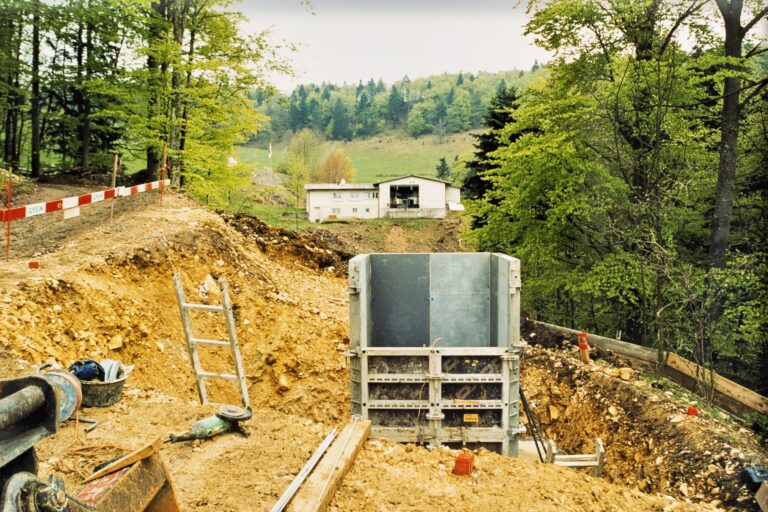
Nevertheless, it remains visible. Immediately behind the valley station lies the entrance to the preliminary tunnel from 1875, which is now closed off with a gate. Two oil lamps found there about a hundred years ago are on display at the Reigoldswil Village Museum. The former office of the Wasserfallenbahn stands next to the valley station and is currently inhabited. And the area where the aerial tramway and its parking lot were built is the fully graded right-of-way of the railway that never existed.
1956—The railroad is coming after all, but over the mountain
Eighty years after the tunnel was built, a gondola lift is bringing visitors to the Wasserfallen—but not without resistance.
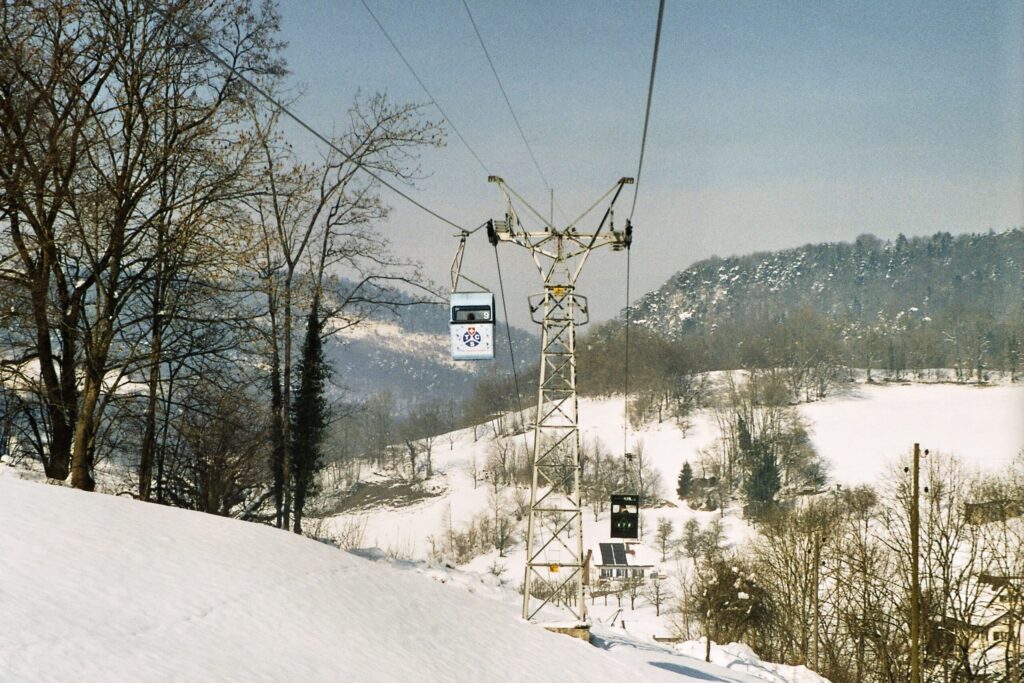
Eighty years after construction was halted, the valley took matters into its own hands. No longer with rails through the mountain, but with a gondola lift over it.
The driving force behind this was Autobus AG Liestal, which had been providing automobile service to the valley since 1905 and currently operates bus line 70. In the early 1950s, the company submitted a concession application to the Federal Department of Posts and Railways for a gondola lift connecting Reigoldswil and Wasserfallen. Almost at the same time, a competing application for a cable car from Waldenburg to Waldweid was under consideration. Both projects were reviewed and compared—the shorter distance to Passwang tipped the scales in favor of Reigoldswil. On December 31, the federal government granted the concession.
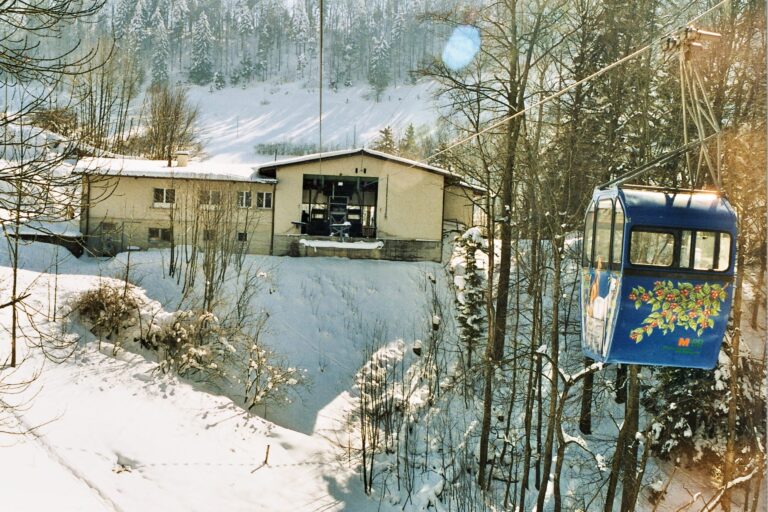
On Saturday, March 3, 1956, the cable car made its maiden run. It had 36 four-seat gondolas, a ride time of twelve minutes, and a capacity of 320 people per hour. A few days earlier, the ski lift on the Vogelberg had begun operating—a project the organizers had helped plan from the very beginning.
The cable car was not without its controversies. On January 14, 1957, unknown individuals knocked over a cable support, putting the gondola out of service; the perpetrators were identified and convicted of disrupting a public service. A second time, a fire was set at the mountain station, specifically targeting the electric drives and the auxiliary engine’s fuel tank. The fire did not spread as intended, but the property damage was significant, and the lift was out of service for two days.
From the ski lift to the scooter
When the snow failed to fall, the railway had to reinvent itself. It did so with wheels, runners, and a new governing body
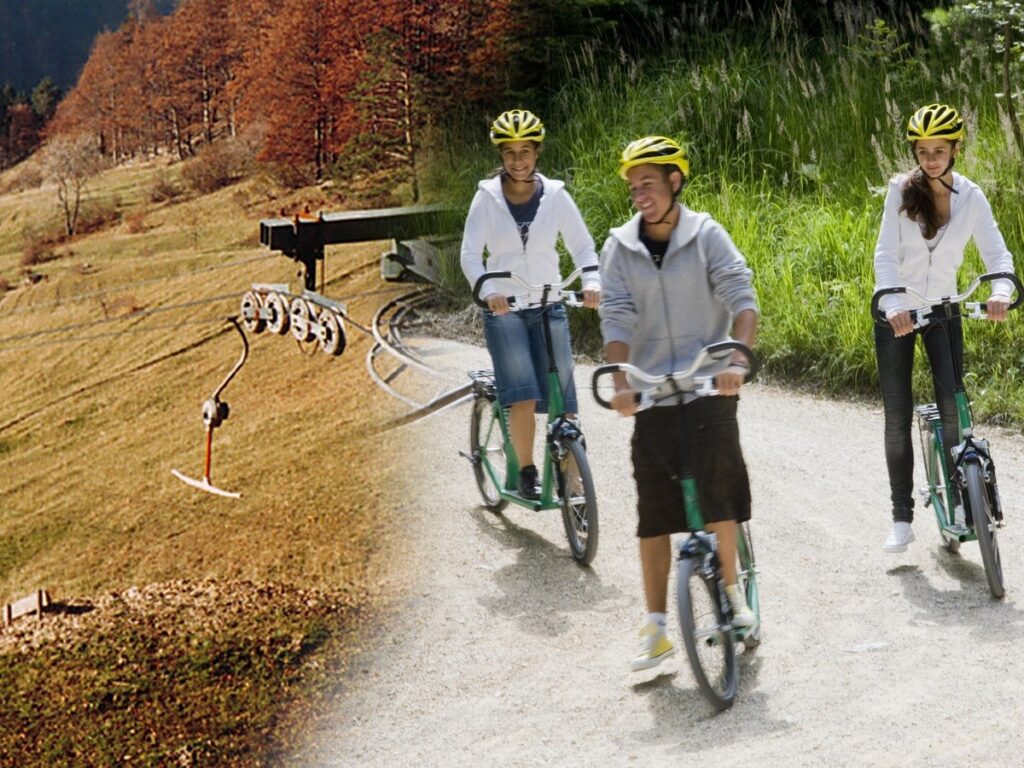
For the first few decades, Wasserfallen thrived on winter. The snow stayed on the ground, the lifts ran, and people from Basel came to ski.
That changed with the climate. Winters became more unpredictable; the ski lifts were no longer profitable and were eventually shut down. Two things remain from that pioneering era: the ’70s-era bus and the gondola lift.
Instead of relying on ski operations, the resort sought new solutions. Scooters for the summer, sleds for the winter, plus fondue nights, snowshoe hikes under the full moon, and senior days. The strategy paid off: From the first scooter rides in 2001, the number had already risen to over 15,000 just one year later. Between 1998 and 2005, the number of passengers rose from around 55,000 to over 95,000—and the railway returned to profitability for the first time in a long while.
At the same time, the operating entity changed. When the Federal Office of Transportation demanded technical upgrades costing millions in the mid-1990s, the operator at the time was no longer willing to spend that money. Instead of shutting down the railway, Autobus AG Liestal transferred it to a nonprofit foundation established specifically for this purpose, with the Canton of Basel-Landschaft, the municipality of Reigoldswil, the Bähnliclub, the Association of Mayors of Basel-Landschaft, the IG Wasserfallen-Passwang, and the Wasserfallen Foundation. The LRW Foundation was established in 1995, with Heidi Tschopp serving as its president. On January 1, 2000, the foundation took over full operational control of the gondola lift.
2006 — the new railroad owned by the region
The new railway cost 11 million francs. More than 8 million of those came from the region itself.
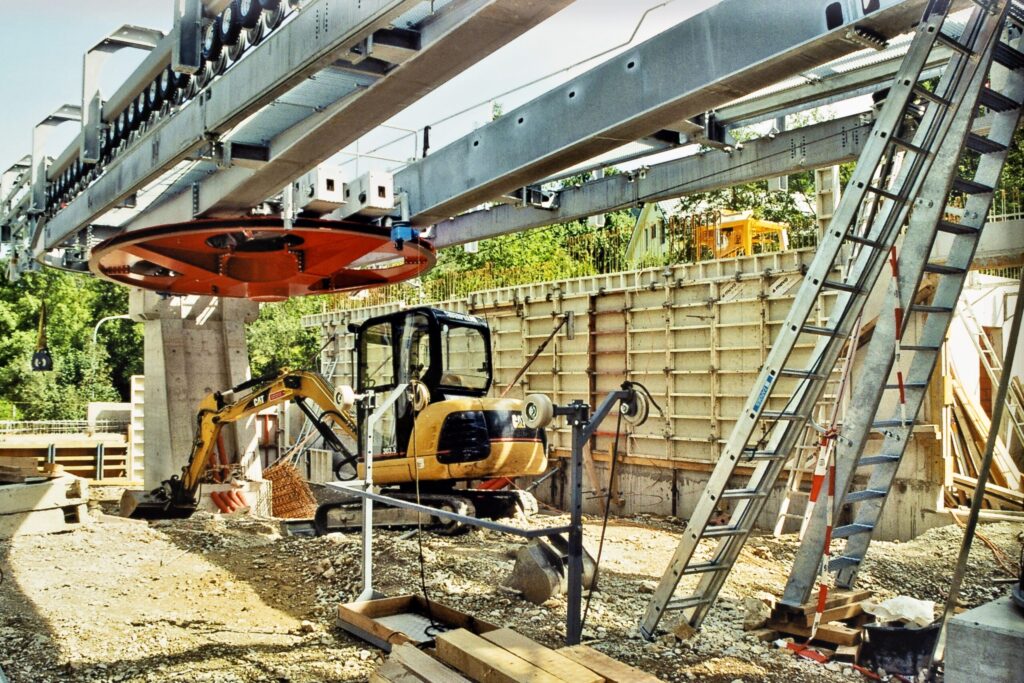
In 2004, the Federal Office of Transportation limited the operating permit for the facility—which was by then fifty years old—to May 2007. This raised a question that had already been asked once before in the valley: give up, or start over?
A new railway line cost 11 million francs. For a foundation that operates a single mountain railway in the Basel-Landschaft Jura, that’s a figure at which most people stop doing the math. On January 18, 2006, the foundation’s board of trustees decided to go ahead with the new construction anyway. By that point, most of the money had already been raised.
The region itself had raised the funds. The fundraising campaign was spearheaded by Heidi Tschopp from Hölstein, an entrepreneur, former district council president, and president of the foundation since its founding in 1995. She wrote to companies, municipalities, and private individuals; attended trade shows and markets throughout the canton; collected certificates; and never gave up. The Bähnliclub, founded as a support association for the foundation, brought the campaign to the villages.
In the end, 8.5 million francs were raised through public funding, sponsorships, and donations. Only 2.5 million had to be financed through bank loans—about eighty percent of the investment was covered before the first support pole of the old railway was taken down.
Source of the 8.5 million:
Swisslos Fund Basel-Landschaft | CHF 4,000,000 || Business and Banks | CHF 1,695,000 || Private Individuals | CHF 1,037,000 || Swisslos Fund Basel-City | CHF 1,000,000 || Municipalities | CHF 448,000 || Associations | CHF 169,000 || Swisslos Fund Solothurn | CHF 100,000 || Wasserfallen Foundation | CHF 36,000 |
More than one million francs of that amount came from private individuals—people from the region who donated to a gondola lift from which they derive no financial benefit. That is precisely why this lift is still owned by a nonprofit foundation rather than a company.
Not everything went according to plan. The original plan to extend the railroad to the Vogelberg failed due to a lack of consent from landowners and concerns about landscape preservation. The section that already existed in 1956 was the one that was built.
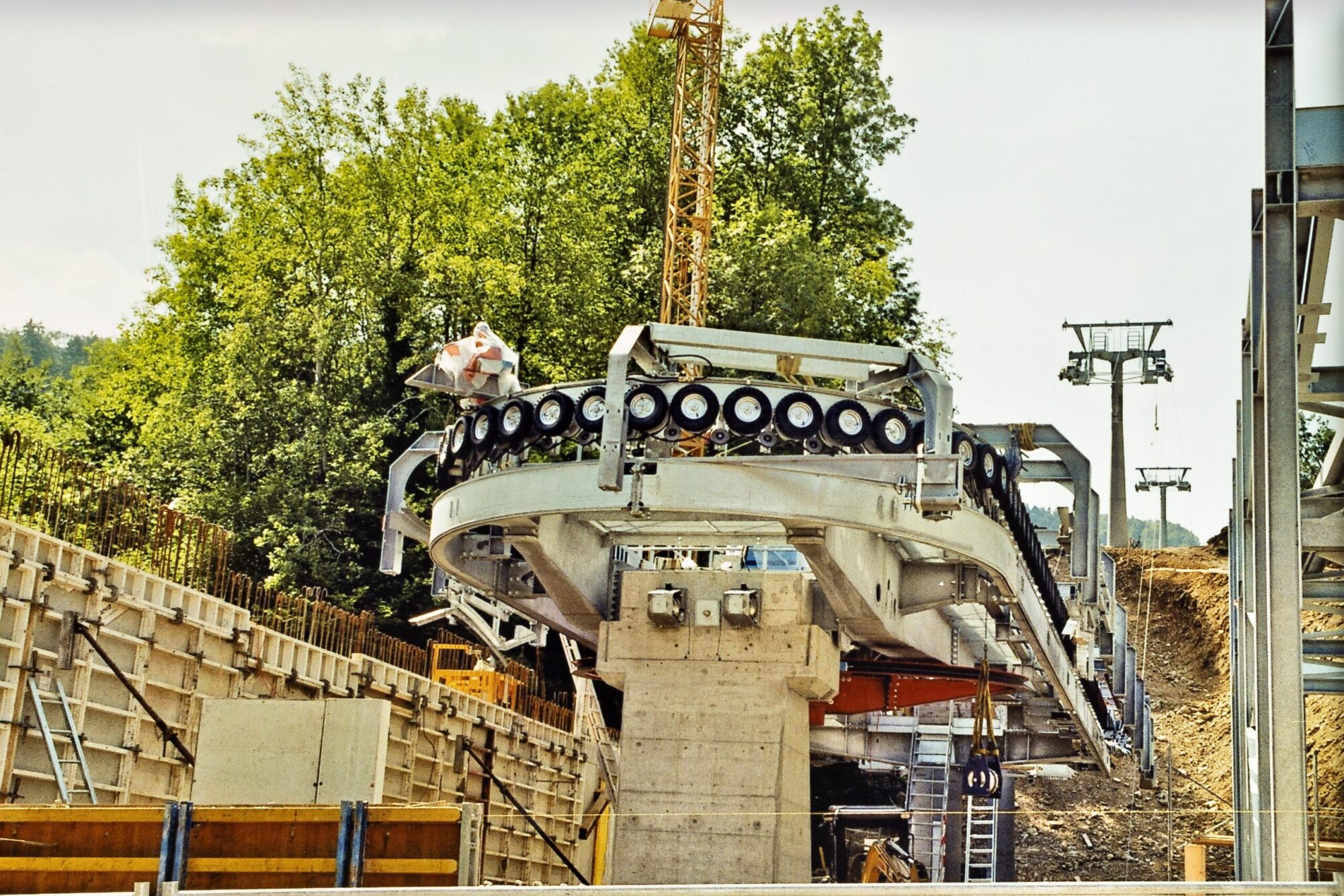
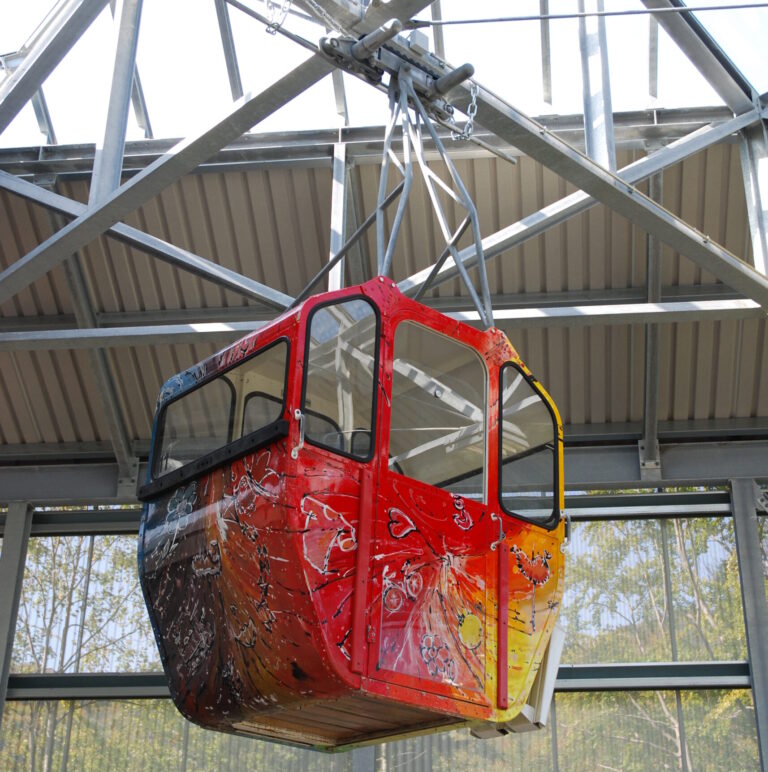
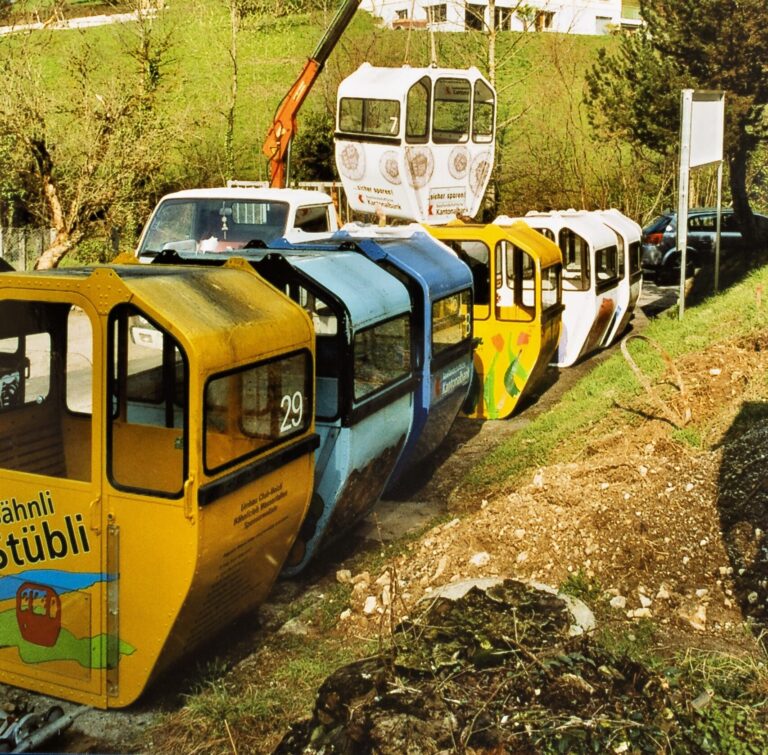
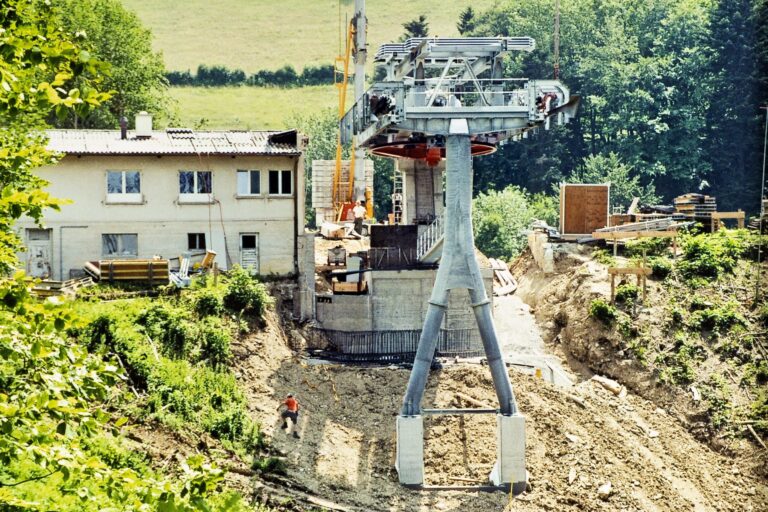
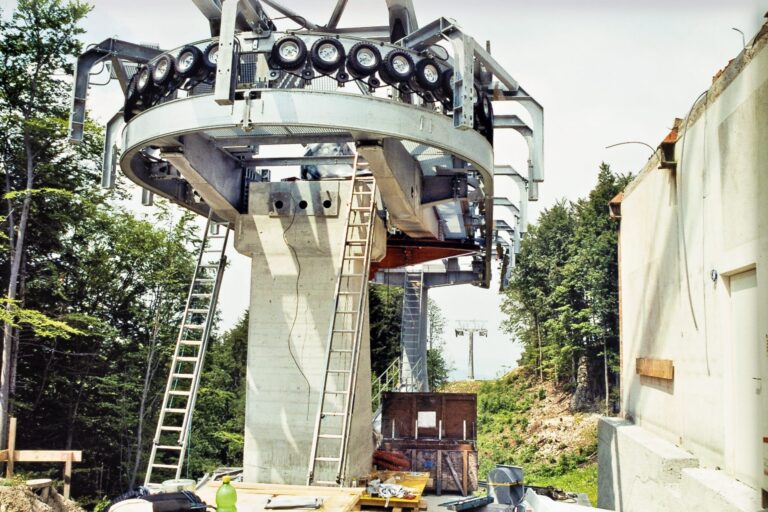
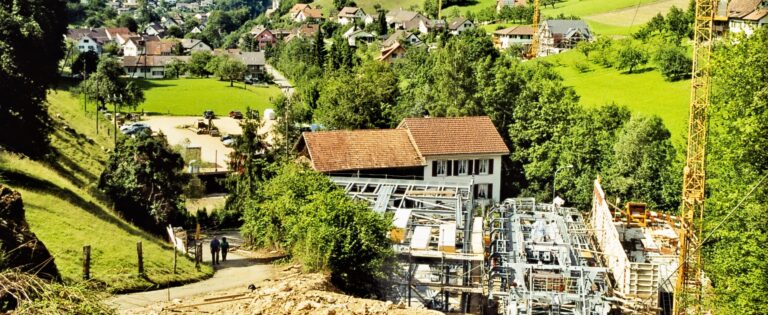
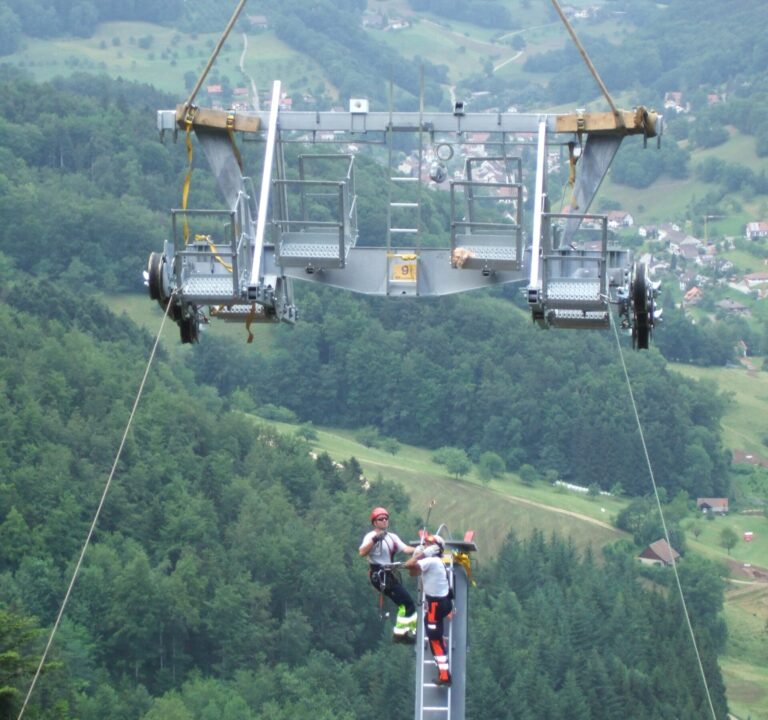
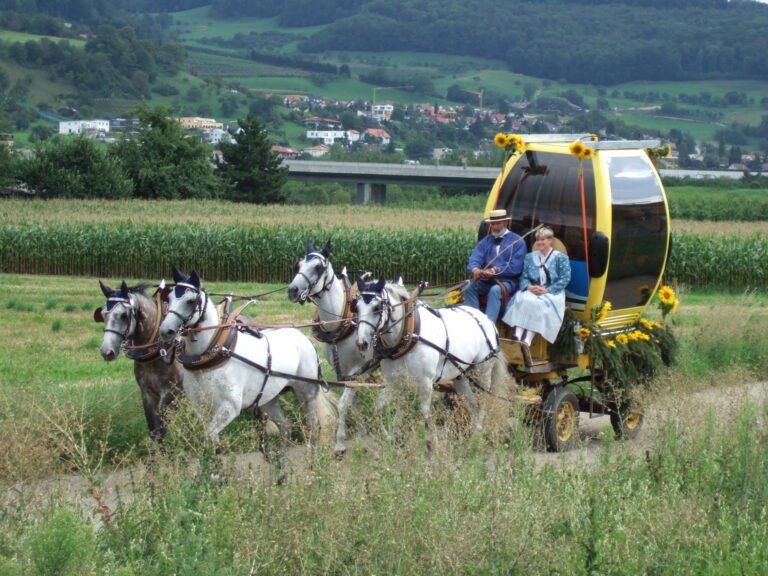
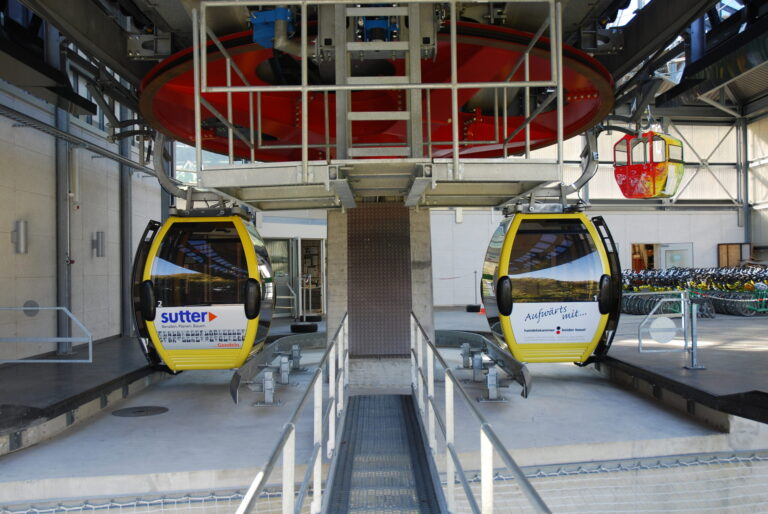
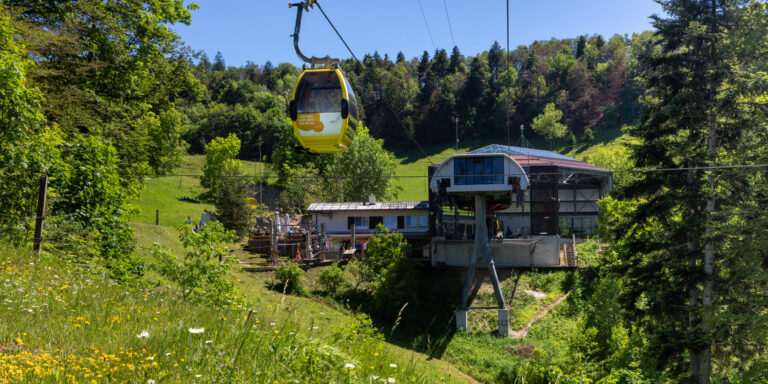
On Easter Monday, April 17, 2006, the old Müller gondola made its final trip down to the valley; demolition began the very next day. From May through September, the current system was built: 26 six-person gondolas, a ride time of eight minutes instead of twelve, and double the passenger capacity. It was inaugurated in late September 2006 with a three-day celebration; National Council President Claude Janiak and Federal Councilor Samuel Schmid attended the official opening ceremony.
Anyone who stops for a bite to eat at the mountain station today will find themselves sitting in the Heidi-Stübli. The restaurant is named after the woman who raised the money for this cable car.
The Wasserfallenbahn Today
What used to be a mountain railway for skiers has become a year-round destination for day trips.
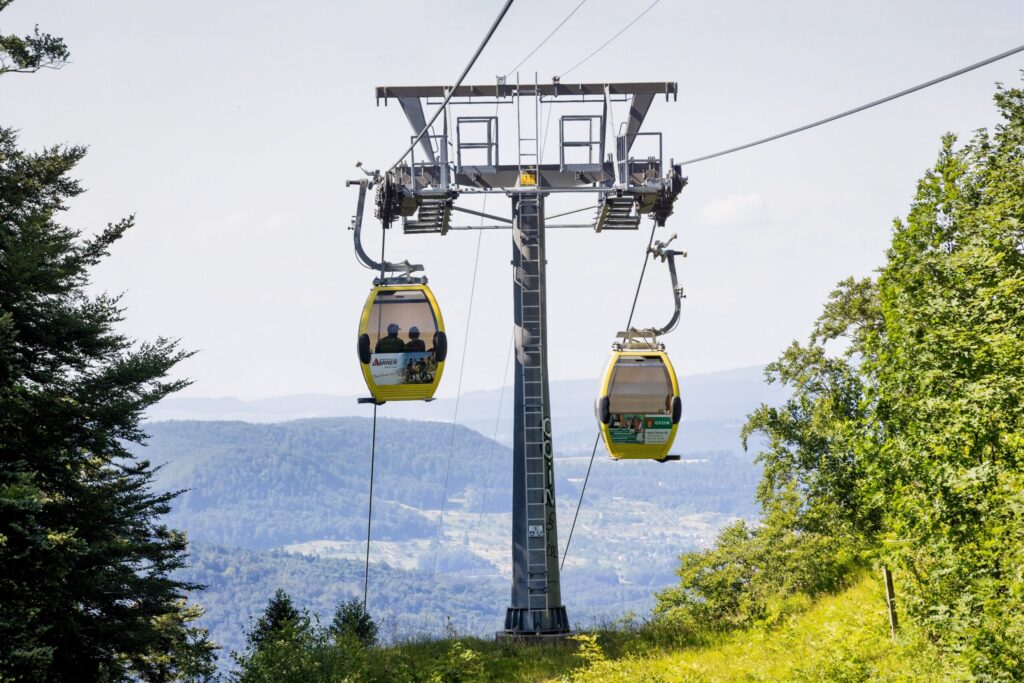
The railway that once carried skiers has become the gateway to an entire recreational region. At the top, marked hiking trails lead toward Passwang and Chellenchöpfli; the Jura Heights Trail passes by; eight mountain restaurants serve visitors; and, depending on the season, guests ride scooters or sleds back down into the valley.
All of this continues to be supported by the nonprofit LRW Foundation and the Bähnliclub, with its approximately 400 members. Neither organization operates for profit; rather, their goal is to ensure that this railway continues to run.
One hundred and fifty years after the tunnel got stuck in the mountain, the valley has been developed—not quite as planned, but developed nonetheless. And the 1875 tunnel is still there, just a few steps behind the valley station.
Do you have any questions about the history of the Wasserfallenbahn?
Yes. Between 1874 and 1875, a 4,185-meter-long railroad tunnel was built from Reigoldswil to Mümliswil. It was intended to connect Basel and Bern by the shortest route. Due to massive water ingress and the bankruptcy of the construction company, work was halted after eleven months.
Up to 550 liters of water per minute flowed into the vertical shafts. The construction company’s pumps were not sufficient; after a thunderstorm in July 1875, excavation came to a standstill, and the construction company went bankrupt in September 1875.
The entrance to the 1875 preliminary tunnel is located directly behind the valley station and is visible from the outside. For safety reasons, it is closed off with a gate and is not accessible.
Since March 3, 1956. The first system had 36 four-person gondolas and took 12 minutes. The current gondola system began operating in the fall of 2006.
Yes. The Vogelberg ski lift began operating in February 1956, shortly before the gondola lift. Because winters became less reliable, the lifts were later dismantled. Today, sledding, snowshoeing, and cross-country skiing define winter at Wasserfallen.
The LRW non-profit foundation, which was founded in 1995 and took over full operations on January 1, 2000. It is supported by the Bähnliclub, which has about 400 members.
The new facility cost 11 million francs. Of that amount, 8.5 million came from public funding, sponsorships, and donations—including 4 million from the Swisslos Fund for Basel-Landschaft and over one million from private individuals. Only 2.5 million had to be financed through bank loans.
By Heidi Tschopp, the long-time president of the LRW Foundation. She played a key role in spearheading the 2006 fundraising campaign for the new building; the restaurant at the mountain station was named in her honor.